Joint Replenishment & Supply Chain Optimization

Engagement Overview
A national retailer and a leading beverage manufacturer operated under a traditional replenishment model characterized by long cycle times, manual order validation, and high inventory volatility during promotional periods. This engagement redesigned the joint replenishment process to improve service levels, reduce working capital, and optimize logistics costs.

The Challenge
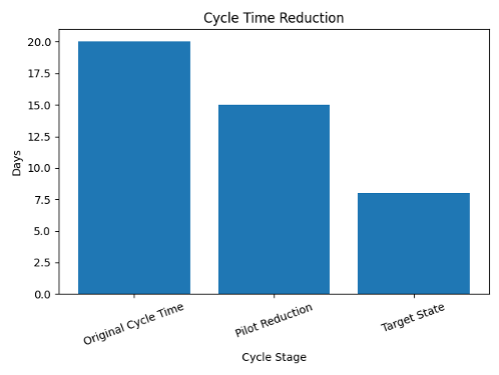
The existing replenishment cycle averaged 20 days, including extended review periods and conservative safety buffers. Manual order adjustments and transport inefficiencies further inflated costs and reduced agility during high-demand periods.

Analytical Approach
Our analytical approach included current-state diagnostics, pilot process implementation at selected distribution centers, root cause analysis of order adjustments, and estimation of logistics and handling inefficiencies. Performance scorecards and governance routines were introduced to support scaling once the engagement ended.
Inventory Volatility During Promotions
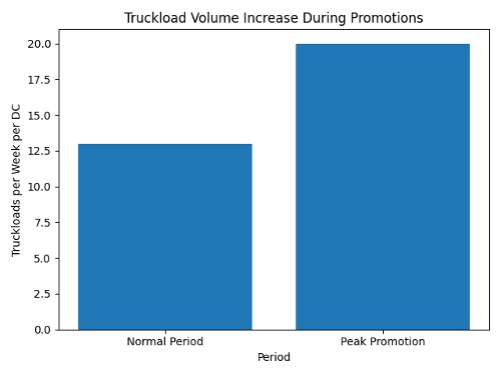
Promotional periods drove a 60% increase in average daily inventory and required significant increases in weekly truckloads. These spikes highlighted opportunities for improved collaborative forecasting and transport planning.
Logistics & Handling Optimization
Analysis identified underutilized full truckload opportunities and avoidable handling costs driven by pallet quality issues. Fixing one packaging-related inefficiency in particular represented an annual cost avoidance potential well into the six figures.

Results & Impact
The initiative unlocked benefits across working capital reduction, service level improvement, logistics cost optimization, and supply chain governance enhancements. A structured weekly management ritual was implemented to proactively manage stock-out risks.
To give one example, by redesigning order validation processes and implementing fixed delivery appointments, cycle time was reduced from 20 days to a projected 8 days. A distribution center that piloted our recommendations immediately reduced cycle time from 23 to 15 days during testing.